
Composite vs Wood Deck in New England: What Deck Builders Recommend
· By Nathan Cunha
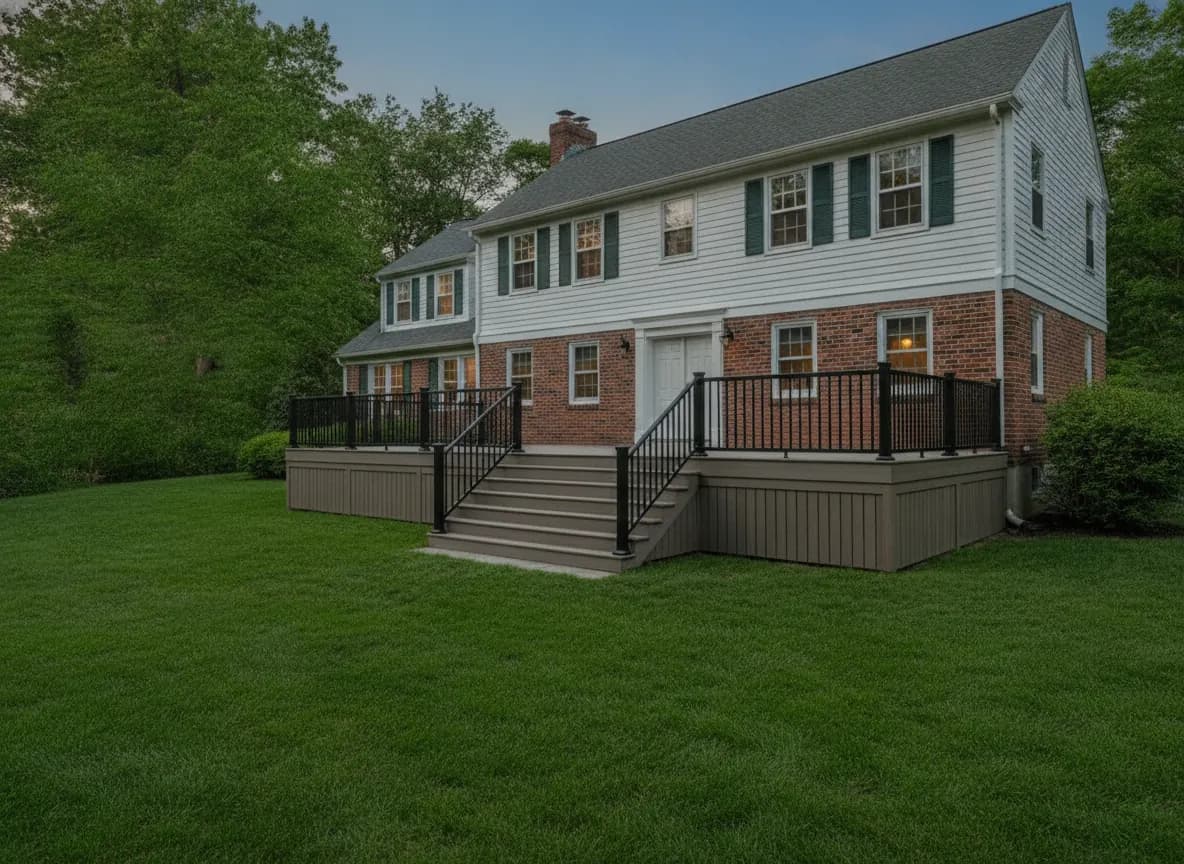
For most New England homeowners, composite decking is the better long-term choice if you plan to stay in the house for 10 years or more, and pressure-treated wood is the better choice if up-front cost matters most. Composite typically costs more to build but needs far less work each year. Wood is cheaper on day one but asks for cleaning, sealing, and board replacement to survive our winters.
That is the short answer. The right call for your yard depends on budget, how much sun and shade the deck gets, how you use it, and how long you expect to own the home. Below is how the two materials really compare in Massachusetts, what drives the price, and what to ask deck builders before you sign anything.
What Each Deck Typically Costs in Massachusetts
Deck pricing in eastern Massachusetts runs higher than the national average. Skilled labor costs more here, and footings have to go below the frost line, which adds digging and concrete that deck builders in warmer states never deal with.
As a rough guide, most pressure-treated wood decks in the state typically land somewhere around $25 to $45 per square foot installed. Composite decks usually run higher, often in the $40 to $80 per square foot range, and premium capped composite or PVC lines with upgraded railings can push past that. A 300 square foot deck is a very different number depending on which side of that line you land.
Those ranges are market averages, not a quote. Height off the ground, stairs, railing style, built-in benches, lighting, and whether an old deck has to come off first all move the final price. The only way to get a real number for your yard is a written estimate after someone walks the site.
Pressure-Treated Wood: Pros and Cons
Pressure-treated southern yellow pine is the standard wood decking in New England. It is widely available, easy to cut and fasten, and it takes stain well. If budget is tight, or you want a bigger deck for the same money, wood gets you there.
The trade-off is upkeep. Wood absorbs water, and our freeze and thaw cycles push that water in and out of the boards all winter. Without a good cleaning and a fresh coat of stain or sealer every couple of years, boards gray, check, cup, and splinter. Shaded decks under big maples and oaks also grow mildew and moss faster.
Plan on some board replacement over the life of a wood deck. Many homeowners get 10 to 15 good years from the surface boards with regular care, less if the deck sits wet and shaded. That maintenance time and cost is the real price of choosing wood.
Composite Decking: Pros and Cons
Composite boards are made from a mix of wood fiber and plastic, and most current lines come with a protective cap on the outside. They do not need staining or sealing. A wash in the spring is usually all they ask for, which is why so many homeowners in towns like Woburn, Burlington, and Reading choose composite when they replace an old wood deck.
Composite also resists rot, splinters, and insects, and the color stays far more consistent than wood. Barefoot kids and dogs are happier on it.
There are downsides. Composite costs more up front. Dark colors get hot in direct summer sun. Some boards can scratch when you drag heavy furniture or grills across them. And composite expands and contracts with temperature, so it has to be installed with the right gaps and fasteners for our climate. Cheap installs that skip the manufacturer's rules are where most composite complaints come from.
How New England Weather Changes the Decision
Our climate is hard on decks. Snow sits on the surface for weeks, ice melt and freeze cycles work into every gap, and spring brings a lot of rain. Salt and ice melt tracked onto the boards can also stain or wear finishes near doors.
Composite handles that cycle with less fuss, since it does not soak up water the way wood does. Wood can absolutely survive New England winters, but only when it is sealed on schedule and the deck drains well.
Here is what many homeowners miss: the frame under the boards is usually pressure-treated wood either way. Composite decking still sits on wood joists and beams. A good builder protects that frame with joist tape, proper flashing at the house, and the right hardware, because a rotted frame under beautiful composite boards is still a failed deck.
Footings, Permits, and Structure Matter More Than Boards
Whichever surface you choose, the part that keeps your family safe is the structure. In Massachusetts, a new deck or a rebuild that is attached to the house or raised off the ground typically needs a building permit from your town, with inspections along the way.
Footings have to go below the local frost depth, which in much of eastern Massachusetts is around 48 inches. Your building department sets the exact rule, so confirm it for your town. The ledger board that attaches the deck to the house needs proper flashing and fasteners so water does not rot the house framing behind it.
NC Construction helps handle the permit process on deck projects and explains each step, so you know what the inspector will look at and why. Before you hire anyone, ask how they size footings, how they flash the ledger, and whether the price in the estimate includes the permit.
Lifetime Cost: Doing the Real Math
Comparing only the install price is how people end up surprised. A fair comparison adds up the build cost plus what you will spend on care over the years you plan to own the home.
With wood, that means cleaning and staining every couple of years (either your weekends or a paid crew), plus replacing boards as they fail. With composite, it is mostly a yearly wash. Over 10 to 15 years, the gap between the two often shrinks a lot, and for some households composite ends up close to even once maintenance is counted.
If you are selling in two or three years, wood usually makes more sense. If this is the house you plan to stay in, composite deserves a hard look.
How to Choose Deck Builders Near You
Search results for deck builders near me will show plenty of names. A few questions sort them out fast. Ask who will actually be on the job, whether you get a written estimate that separates framing, decking, railings, and stairs, and how the builder handles footings, flashing, and permits.
In Massachusetts you can look up a contractor's Home Improvement Contractor (HIC) registration and Construction Supervisor License (CSL) on mass.gov. It takes a few minutes and is worth doing for any contractor you are considering.
At NC Construction, you talk directly with the owner, Nathan Cunha, who is on the job. You get one point of contact, a clear written estimate, and a straight answer on whether wood or composite fits your yard and budget. Request a free estimate and we will walk the space with you.
Frequently asked questions
- Is composite decking worth it in New England?
- For most homeowners who plan to stay 10 years or more, composite decking is usually worth it in New England because it does not need staining or sealing and handles snow and freeze and thaw cycles with less upkeep than wood. If you plan to sell soon or budget is tight, pressure-treated wood is often the better value.
- How much does a composite deck cost compared to a wood deck in Massachusetts?
- As a rough market guide, pressure-treated wood decks in Massachusetts typically run about $25 to $45 per square foot installed, while composite decks often run about $40 to $80 per square foot. Size, height, stairs, railings, and site conditions change the price, so a written estimate is the only reliable number.
- How long does a pressure-treated deck last in Massachusetts?
- With regular cleaning and a fresh stain or sealer every couple of years, many pressure-treated decks in Massachusetts give 10 to 15 good years before the surface boards need major replacement. Shaded, wet decks and decks that skip maintenance usually wear out sooner.
- Do I need a permit to build a deck in Massachusetts?
- In most Massachusetts towns, a deck that is attached to the house or raised off the ground typically needs a building permit and inspections, including footings that go below the local frost depth. Rules vary by town, so check with your local building department or ask your contractor to handle the permit.
- Can I put composite boards on my existing deck frame?
- Sometimes. If the existing frame is solid, correctly spaced for composite, and properly attached and flashed at the house, new composite boards can go on top. Many older frames have joists spaced too wide or hidden rot, so the frame should be inspected before you decide.
Found this helpful? Make us a preferred source on Google.
Free estimate
Want real numbers for your project?
Get a free, written estimate based on your home, not a phone guess.